The Short Version
- 2023, 2024 and 2025: No bare trust filing was required.
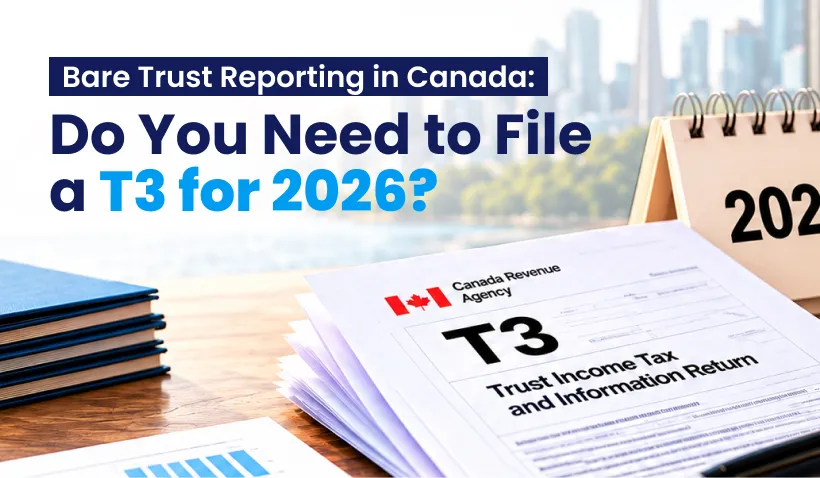
- 2026: Certain bare trusts must file a T3 return and Schedule 15 for the first time.
- Deadline: March 31, 2027, for a December 31, 2026 year-end.
- Many arrangements are exempt, but you have to confirm that before assuming it.
How It All Began
In 2022, Ottawa amended the trust reporting regime. Bare trusts were included along with everyone else, and very soon it was not clear what common situations would fall under that requirement. The CRA provided three years of filing relief. But now that relief period ends. Bill C-15 passed Royal Assent on March 26, 2026, and replaced the initially broad approach with a narrow one. These rules will be applicable starting from December 31, 2026.Bare Trust Definition
A bare trust is said to be present when there is a situation in which a single individual has the legal ownership over the asset but merely acts as the agent on behalf of the actual or beneficial owner. Without the exceptions, this is the description of many common situations.Arrangements That May Need to File
Situations that commonly raise a filing question include:
- A nominee corporation holding real estate for unrelated co-venturers
- Joint venture property registered in a single name
- A bare trustee holding land for a limited partnership
- Rental property titled to one person but beneficially owned by another
If you use a nominee, joint title, or informal “in trust for” arrangement, take a fresh look at how it’s set up. Higher-value arrangements deserve the closest review.
Common Exemptions
Available to all trusts:
- Trusts with total assets worth less than $50,000 throughout the year
- Certain family trusts under $250,000 holding only qualifying assets (deposits, GICs, and certain life insurance policies)
- Trusts that existed for less than three months in the year
Additional relief for bare trusts:
- Arrangements where the legal and beneficial owners are effectively the same
- A parent added to title solely to help a child qualify for a mortgage
- Certain joint spousal property arrangements and court-ordered holdings
- General partners holding partnership property, where the partnership files its T5013 return
If your situation is a corporate nominee holding investment real estate or a bare trust in a commercial joint venture, it likely falls outside these exemptions. Plan to prepare a T3 and Schedule 15.
What Schedule 15 Requires
Schedule 15 asks for identifying details on every trustee, settlor, beneficiary, and any person who can control the trust’s decisions. Gathering that information from family members or business partners can take time, so start early.
Penalties for Getting It Wrong
- Late filing: $25 per day, with a minimum of $100 and a maximum of $2,500.
- Gross negligence: The greater of $2,500 or 5% of the highest fair market value of the trust’s property during the year.
Other 2026 Numbers Worth Knowing
- The capital gains inclusion rate stays at 50%. The proposed increase was cancelled in March 2025.
- The 2026 RRSP dollar limit is $33,810.
- The 2026 TFSA limit is $7,000, bringing lifetime room to $109,000 for someone eligible since 2009.
What to Do Now
- List every property or account held in someone else’s name, or by someone on another’s behalf.
- Identify who holds legal title and who holds beneficial ownership.
- Check each arrangement against the exemptions above.
- If you may need to file, start collecting Schedule 15 information before year-end.
At Veritas Taxes, we help families and business owners review these arrangements, confirm whether an exemption truly applies, and prepare filings well before the deadline. If you’re unsure about a nominee, joint title, or family property arrangement, contact us for a short review.
Disclaimer: This article is for general informational purposes only and does not constitute tax, legal, or accounting advice. Please consult a qualified professional about how these rules apply to your specific situation.